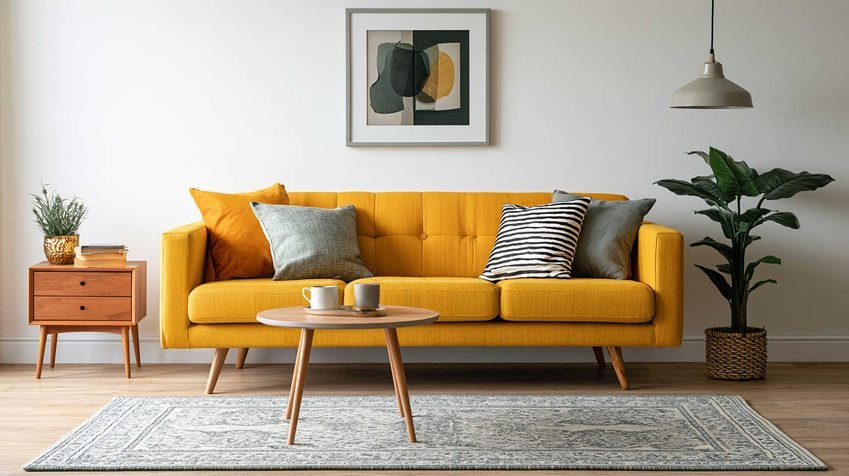
Furniture looks wrong at home because your lighting, room size, existing colors, and layout are nothing like the showroom or the product photo where you first saw it. Showrooms are engineered to flatter furniture. Your living room is not.
The piece is rarely defective, and your taste is rarely the problem. The cause is usually a mismatch in one of five areas: lighting, scale, undertones, layout, or room cohesion. This guide covers each one, with measurements, specifications, and typical costs so you can fix the problem or avoid it next time.
Quick Answer: The 5 Main Causes
| Cause | What You Notice | Typical Fix |
|---|---|---|
| Lighting mismatch | Color looks different, fabric looks flat | Change bulbs, add lamp layers |
| Scale and visual mass | Piece feels “too big” or “too small” | Resize rug, adjust layout, swap accessories |
| Undertone clash | Wood, fabric, or paint look “off” together | Add bridging colors or materials |
| Poor layout | Room feels cramped, empty, or awkward | Float furniture, restore walkways |
| No cohesion | Everything competes for attention | Build a palette with 3 to 4 repeating colors |
How the Showroom Tricks Your Eyes
Furniture stores are controlled environments. Understanding their advantages explains why the same sofa looks different when it arrives.
- Professional lighting. Directional spotlights and high-output overhead fixtures reduce harsh shadows and make fabrics and wood grain look richer.
- Neutral backdrops. Walls and floors are kept neutral so colors read as “clean.”
- Oversized space. High ceilings and wide aisles make large furniture look smaller than it is. A 90-inch sofa that seems modest in a 5,000-square-foot showroom can dominate a 12 x 14 ft living room.
- Styled accessories. Rugs, lamps, and art are chosen to make the piece look complete.
Product photos add another layer. Wide-angle lenses exaggerate space, studio lighting shifts color, and styling hides true proportions. Your home then applies its own distortion on top, so online purchases suffer a double effect.
Cause 1: Lighting Changes Color and Depth
Lighting is the most common reason furniture looks different at home. It changes both the color and the texture of every surface.
Bulb Color Temperature
Color temperature is measured in Kelvin (K). Lower numbers are warmer and yellower, and higher numbers are cooler and bluer.
| Bulb Type | Temperature | Effect on Furniture |
|---|---|---|
| Warm white | 2700K | Gray fabric looks beige, wood looks orange or red |
| Soft white | 3000K | Balanced and cozy, slight warmth |
| Neutral white | 3500K to 4000K | Closest to showroom feel, crisp colors |
| Daylight | 5000K to 6500K | Beige fabric looks gray, wood looks muted and cold |
CRI (Color Rendering Index) matters as much as Kelvin. A bulb with CRI 80 renders colors adequately, but CRI 90 or higher shows fabric and wood tones much more accurately. Showrooms use high-CRI lighting, while many household bulbs sit near CRI 80.
Window Direction
- North-facing rooms receive cool, indirect light that makes colors look bluer and greyer.
- South-facing rooms receive warm, strong light that intensifies yellow and orange tones.
- East-facing rooms are warm and bright in the morning and cooler later.
- West-facing rooms turn golden and warm in the afternoon and evening.
A charcoal sofa that looked rich in the store may look flat in a north-facing room and brownish in a west-facing one.
Shadows and Depth
Stores use light from multiple angles, which softens shadows and shows off texture. Homes often rely on a single overhead fixture, which creates harsh shadows and makes furniture look heavier or flatter. A room with only ceiling light will make almost any piece look worse than it should.
Fix: Use three lighting layers: ambient (ceiling or wall fixtures), task (reading and floor lamps), and accent (table lamps, sconces). Match bulbs to the same Kelvin rating throughout the room.
Cause 2: Scale and Visual Mass
A piece can fit the room on paper and still feel wrong. Measurements describe physical size, while your eyes judge visual mass, the perceived weight of an object.
What Increases Visual Mass
- Dark colors, which absorb light and look heavier
- Thick, rolled arms and deep, bulky cushions
- Low, ground-hugging frames with no visible legs
- Solid bases in place of exposed, slender legs
- Low ceilings, which make everything feel larger
What Reduces Visual Mass
- Exposed legs that let floor show underneath
- Light or mid-tone upholstery
- Slim arms and tight-back designs
- Glass, acrylic, or open-frame tables
- Furniture set slightly away from walls
Standard Furniture Clearances
These are common design guidelines to check before buying.
| Element | Recommended Measurement |
|---|---|
| Main walkway | 30 to 36 inches |
| Secondary walkway | Minimum 24 inches |
| Sofa to coffee table | 14 to 18 inches |
| Coffee table height | Equal to or 1 to 2 inches below sofa seat height |
| Living room rug | Front legs of all seating on the rug |
| Dining rug | Extends 24 inches beyond table on all sides |
| Dining table to wall | 36 to 48 inches for chair movement |
| Curtain rod | Mounted 4 to 6 inches above window frame, or near ceiling |
The Tiny Rug Problem
A small rug under a large sofa is one of the most common causes of a room that “feels off.” Rugs anchor a seating area, and an undersized one makes furniture look like it is floating without support.
| Room Size | Typical Rug Size | Approximate Price (Mid-Range) |
|---|---|---|
| Small living room or bedroom | 5 x 8 ft | $100 to $400 |
| Standard living room | 8 x 10 ft | $200 to $800 |
| Large living or open-plan space | 9 x 12 ft | $300 to $1,200 |
| Dining room (4 to 6 seats) | 8 x 10 ft | $200 to $800 |
Prices are approximate and vary widely by material, brand, and region.
Fix: Before buying, outline the piece on the floor with painter’s tape and stand or sit in the space for a day. Cardboard boxes stacked to the piece’s height give a quick sense of vertical mass.
Cause 3: Undertones Clash
Every wood stain, paint, and fabric has an undertone: warm (yellow, red, orange), cool (blue, green, gray), or neutral. When two undertones fight, the room feels wrong even if you cannot name why.
Common clashes include:
- A cool gray sofa against warm oak flooring
- A red-toned cherry table beside yellow-beige walls
- A white sofa that leans cool next to cream trim
These differences are hard to spot in a store where surrounding colors are neutral. At home they become obvious.
Fix: Identify the dominant undertone of your floors and walls first. Choose furniture that matches it, or pick a truly neutral piece and bridge the gap with pillows, throws, or art that repeat colors from both sides.
Cause 4: Layout and Flow
Even perfect furniture can feel wrong when placed poorly. Two layout habits cause most of the trouble.
The Perimeter Trap
Pushing every piece against the walls feels efficient, but it leaves a dead zone in the center and makes seating feel distant. It also makes conversation harder, because people sit too far apart.
Designers commonly recommend “floating” furniture a few inches to a couple of feet from the wall, especially in larger rooms. This defines zones, improves flow, and makes each piece look intentional.
In small rooms, a sofa against the wall is fine. Balance it by floating accent chairs or side tables so everything does not hug the perimeter.
Blocked Walkways and Lost Focal Points
A layout should let people move naturally from each entry to the main seating area. Coffee tables that force zigzagging, or chairs that jut into paths, make a room feel cramped. Rooms also need a clear focal point, such as a fireplace, window, or art wall, and furniture should relate to it. If everything faces a TV, the room works as a screening room rather than a social space.
Cause 5: No Cohesion or Color Story
Buying pieces one at a time without an overall plan creates visual noise. Each item may be beautiful, but together they compete.
A simple system prevents this:
- Dominant color (60%): walls, large rugs, main sofa
- Secondary color (30%): accent chairs, curtains, bedding
- Accent color (10%): pillows, art, decor
Repeat materials too. If you have black metal in a lamp, echo it in a picture frame or table leg. Repetition makes a space feel planned.
Also check height variation. When everything sits at the same level, a room looks flat. Combine low seating with tall lamps, floor plants, bookshelves, and art hung higher on the wall.
Cost of Common Fixes
Most furniture regret can be fixed cheaply before returning or replacing the piece.
| Fix | Approximate Cost |
|---|---|
| High-CRI LED bulbs (pack) | $10 to $30 |
| Smart bulbs with adjustable color temperature | $10 to $25 each |
| Floor lamp | $40 to $200 |
| Table lamp | $30 to $150 |
| Rug pad (to anchor a rug) | $30 to $100 |
| Larger area rug | $200 to $1,200 |
| Furniture risers or leg replacements | $15 to $60 |
| Painter’s tape and cardboard (for mockups) | $5 to $15 |
| Laser measure | $25 to $60 |
| One-time online design consultation | $100 to $500 |
Ranges are approximate and vary by region, brand, and quality.
A design consultation can cost less than replacing a single wrong sofa. A designer can quickly identify whether the issue is layout, scale, lighting, or color.
Pre-Purchase Checklist
Use this before you buy anything large.
- Know your bulbs. Check the Kelvin rating and CRI of the lights in the room. Aim for 2700K to 3000K in living areas and CRI 90 or higher if color accuracy matters.
- Identify undertones. Note whether your floors, walls, and existing furniture lean warm, cool, or neutral.
- Measure everything. Record width, depth, height, and seat height. Check that doorways, hallways, and stairwells allow delivery.
- Tape it out. Mark the footprint on the floor and live with it for a day.
- Judge visual mass. Consider color, leg height, and arm thickness, not just dimensions.
- Order swatches. View fabric and finish samples in your own lighting, in morning and evening light.
- Check the return policy. Look for return windows, restocking fees, and return shipping costs. Large furniture returns can cost significantly more than the piece’s markup.
- Use a visualization tool. Many retailers and apps offer augmented reality previews that place a 3D model in your actual room. They are useful for scale and layout, though color accuracy varies.
How to Fix Furniture That Already Looks Wrong
Before returning or replacing anything, work through these steps in order. They run from cheapest to most expensive.
- Fix the lighting. Swap mismatched bulbs for a consistent Kelvin rating and add at least two lamps at different heights.
- Move the furniture. Pull the piece 6 to 24 inches from the wall and reassess. Rotate it to face the room’s natural focal point.
- Upgrade the rug. An undersized rug can make a good sofa look wrong. Size up so the front legs of every seat sit on it.
- Bridge undertones. Add pillows, throws, or art in colors that appear in both the furniture and the surrounding room.
- Lighten visual mass. Add legs or risers, remove unnecessary bulky pillows, or place a glass or open-frame table nearby.
- Add height. Use tall plants, floor lamps, or higher-hung art to break up a flat visual line.
- Edit. Remove one or two pieces. Negative space helps the remaining furniture stand out.
If the piece still looks wrong after these steps, it is likely a genuine mismatch in scale or style, and returning it makes sense.
Online Purchases: Extra Risk
Online buying compounds the problem because you lose the chance to sit on, measure, and view the piece in person. To reduce risk:
- Read reviews that include customer photos taken in real homes, not just studio images.
- Order fabric and finish swatches before committing.
- Confirm exact dimensions, including seat height and depth, and compare them to a piece you already own.
- Ask about return shipping costs before checking out.
Frequently Asked Questions
Stores control lighting, spacing, and surrounding colors to flatter every piece. They also have high ceilings and large floor areas that make furniture look smaller. In your home, ordinary lighting, tighter space, and existing decor change how the piece reads.
Bulb temperature and window direction change how color reads. Warm bulbs can make gray look beige, while cool light can make beige look gray. The surrounding wall and floor colors also reflect onto the fabric.
Physical size and visual mass are different. Dark colors, bulky arms, low frames, and solid bases make a piece look heavier than its measurements suggest. Exposed legs and lighter upholstery reduce that effect.
In small rooms it often has to be, and that is fine if you balance it by floating other pieces. In larger rooms, pulling furniture a few inches to a couple of feet from the wall usually improves flow and conversation.
The rug should be large enough that at least the front legs of all major seating rest on it. An 8 x 10 ft rug suits most standard living rooms, while smaller rooms can use 5 x 8 ft.
Outline the footprint with painter’s tape, stack boxes to the piece’s height, order fabric swatches, and view them in morning and evening light. Augmented reality apps can also help you check scale and placement.
Often yes. A single consultation can identify whether the real problem is layout, scale, lighting, or color, and it may cost less than replacing the wrong piece.
Final Takeaway
Furniture looks wrong at home because context changes everything: light, space, color, and layout. Before you buy, check your bulbs, measure the footprint, judge visual mass, and see swatches in your own lighting. After you buy, fix lighting first, then layout, then rugs and accessories. Most “wrong” furniture is fixable with small, inexpensive changes.
Happy Designing!
Share Why Does Furniture Look Wrong at Home After Buying? with your friends and leave a comment below with your thoughts.
Read How Do You Find the Right Rug Size for Odd Rooms? until we meet in the next article.